How to read Revelation
Select a translation of the Book of Revelation:
Translation names
- NRSVue: New Revised Standard Version Updated Edition
- CEB: Common English Bible
- NABRE: New American Bible (Revised Edition)
Note: Unless otherwise stated, all quotations below from the Bible are from the New Revised Standard Version Updated Edition (NRSVue).
Revelation's audience
Each book of the Bible was written to a specific audience at a specific time. We are not the initial intended audience. When Paul wrote 1 Corinthians, the audience was the church of God that is in Corinth
(1:2). The issues Paul addressed were those experienced by those people in that ancient city. We get a real taste of this when Paul replies to the Corinthians, Now concerning the matters about which you wrote
(1 Corinthians 7:1). Sure, modern readers can learn from these ancient writings, but we do so only in a secondary way, looking over the shoulders of the original audience, as it were. And we understand only so far as we can get into the mind and world of these people and their specific issues. If we read the texts as if we were the primary audience, we badly misunderstand them and will badly misunderstand them.
Of course, our distance from these writings and their audiences means some things we'll never fully understand - like Paul's comment about people being baptised on behalf of the dead
(1 Corinthians 15:29). But, as much as we're able, we need to try putting ourselves into the shoes of those early Christians to whom the writings were written, rather than approach the books from a generational narcissism that reads the texts as if they were written for us. Furthermore, our inability to truly put ourselves into these ancient worlds - our inability to truly understand the books - should bring us humility in our interpretations.
Perhaps this is especially so for a book like Revelation, which is full of strange imagery. Important to remember when reading the book is that its vast strangeness is a problem with us. Part of why we struggle to understand it is because it wasn't written to us and we're living thousands of years distance from the time and place of the people to which it was addressed. For its original audience, though, it wouldn't have been so mysterious.
Like other letters in the New Testament, Revelation tells us to whom it was written: to the seven churches that are in Asia
(what is now part of Turkey) - specifically, those in Ephesus, Smyrna, Pergamum, Thyatira, Sardis, Philadelphia, and Laodicea (1:4,11) (see Figure 1 and click this link to see the location of the seven churches on a modern map). And it was probably written sometime between 70 and 96 CE, during the reign of one of the Roman emperors Vespasian, Titus or Domitian. Sure, other churches could listen in and learn something (2:7,11,17,29; 3:6,13,22), but it was to these people, in these locations, under the circumstances of their lives, a very long time ago, for whom the book was written - not to us. Far more than us, they would've understood the book because it was from someone they probably knew personally, addressed issues of which they had experience, and used imagery with which they were familiar. For us to understand it as best we can (which may never be perfectly), we need, as best we can, to understand the contexts in which the book was written and its audience lived.
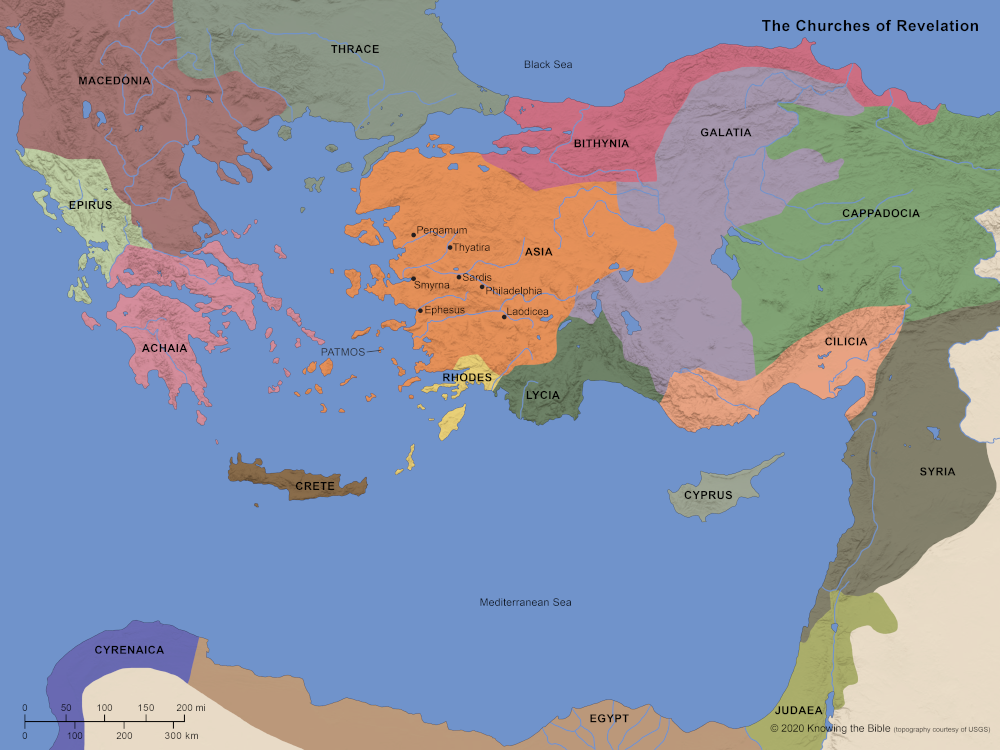
To some degree, we're likely used to doing this, learning about the context of these early Christians to help us understand the writings written for them. Take the words John wrote to Laodicea, for instance:
For you say,
I am rich, I have prospered, and I need nothing.You do not realize that you are wretched, pitiable, poor, blind, and naked. Therefore I advise you to buy from me gold refined by fire so that you may be rich, and white robes to clothe yourself and to keep the shame of your nakedness from being seen, and salve to anoint your eyes so that you may see—Revelation 3:17-18
There's a lot going on here and it can feel like a random shopping list. We understand this better, however, by learning a bit of history about Laodicea.
Laodicea was a wealthy city, known for its banks, its textile industry, its medical school with its ophthalmology, and the local eye-salve. Clearly v. 17-18 play on these local features, suggesting that the church, participating too readily in pagan society, shares the complacency of this prosperous city
—Bauckham, 'Revelation' in Barton and Muddiman (eds), The Oxford Bible Commentary (OUP, 2001), p. 1292
(cf. Mansfield, The Apocalypse Epitomised (Logos, n.d.), p. 62-63)
Putting ourselves into the context of ancient Laodicea helps us understand the message to the church there - and it also helps us see if we can apply the message's principles to ourselves in our own time.
Revelation's timeframe
The above considerations also help us understand Revelation isn't addressing a future far off from the time of its first audience. It was addressing them with things they'd understand, things that were either contemporary with them or were to happen soon, in their lifetime. Revelation was written for them, to guide them through the things they were experiencing, as expressed in the book's introduction:
Blessed is the one who reads the words of the prophecy, and blessed are those who hear and who keep what is written in it, for the time is near. John to the seven churches that are in Asia
—Revelation 1:3-4
In the first instance, the one who read
and those who heard
were people within those seven churches of Asia. And they were blessed
if they heard the words of the prophecy because they could keep those words, be guided by them through the tribulations that were about to come on the world, for that time was near.
The immediacy of Revelation's timeframe is made clear throughout the book, as it is in the first verse: the revelation of Jesus Christ
was given to show his servants what must soon take place
(1:1).
Many of the things Revelation said would soon take place were violent outpourings on the earth. For instance, soon people would slaughter one another
(6:4) and a fourth of the earth
(perhaps 15 million people in the Roman Empire of John's day) would be killed by sword, famine, and pestilence and by the wild animals
(v8).
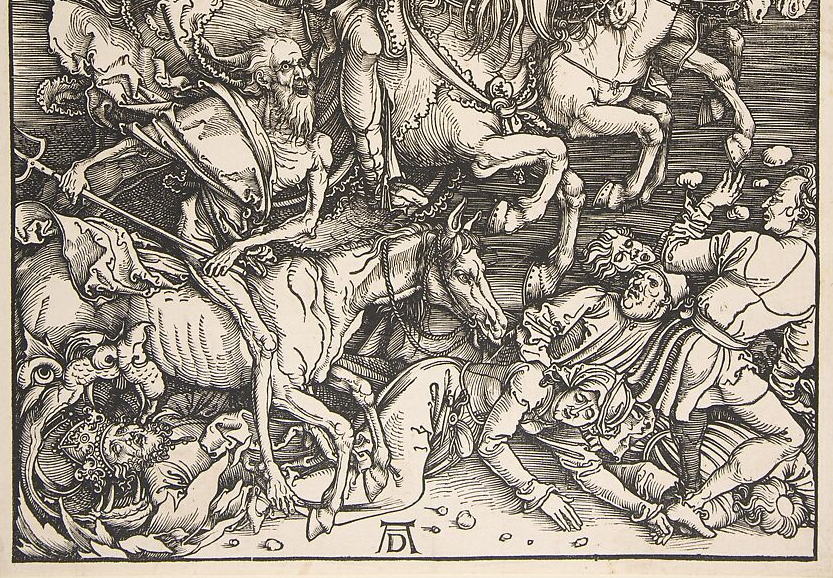
These were thing John's Christian audience could avoid if, as we've seen (1:3), they were guided by Revelation and continued as faithful followers of Jesus. Avoiding these tribulations would be a blessing
(1:3), indeed. Thus, the message to the church in Philadelphia encouraged that church with these words:
Because you have kept my word of endurance, I will keep you from the hour of trial that is coming on the whole world to test the inhabitants of the earth. I am coming soon; hold fast to what you have, so that no one takes away your crown.
—Revelation 3:10-11
Jesus was coming soon to bring tribulations onto the earth, but the church at Philadelphia would be spared from the horrors. This wasn't necessarily true for all the seven churches, however. If they didn't repent, the church in Ephesus would experience the full force of Jesus's wrath (2:5), as would the church in Sardis (3:3) and some in the church in Pergamum (2:16):
I will come to you and remove your lampstand from its place, unless you repent. [...]
Repent, then. If not, I will come to you soon and wage war against them with the sword of my mouth. [...]
repent. If you do not wake up, I will come like a thief, and you will not know at what hour I will come to you.—Revelation 2:5,16; 3:3
If they didn't repent, Christ's imminent coming would be for them a horror: they would be destroyed in the violence Christ was about to unleash on the earth.
Christ's imminent return was also expressed to the church in Laodicea, but in a more positive way: Listen! I am standing at the door, knocking; if you hear my voice and open the door, I will come in and eat with you, and you with me
(3:20). The end was near: Christ was at the door, about to enter. How people experienced his arrival - wrath or welcome - depended on whether they adhered to and followed the words of Revelation (1:3).
To the church in Smyrna, part of the message was, Do not fear what you are about to suffer. Beware, the devil is about to throw some of you into prison
(2:10) - again indicating that Revelation's concern was not for the distant future, but for the things the churches in Asia were experiencing. And part of the message to the church in Thyatira was, I do not lay on you any other burden; only hold fast to what you have until I come
(2:24-25). The plain reading of this is that the people to whom these words were addressed were to experience Christ's coming in their lifetime. If they were faithful, his coming would be a blessing. If they were unfaithful, like that woman Jezebel
(v20), his coming would bring disaster:
Beware, I am throwing her on a bed, and those who commit adultery with her I am throwing into great distress, unless they repent of her doings, and I will strike her children dead.
—Revelation 2:22-23
Another group alive when John wrote would also witness the fulfilment of Revelation. The people who killed Jesus would see him return:
Look! He is coming with the clouds;
every eye will see him,
even those who pierced him,
and all the tribes of the earth will wail on account of him.—Revelation 1:7
What John writes was to happen within the lifetime of those responsible for Jesus's death. Presumably these people, too, would experience the wrath rather than the welcome, wailing with all the tribes of the earth.
The middle chapters of Revelation detail the horrors Christ was about to pour onto the earth, which we got a glimpse of above, from Revelation chapter 6, where wars, famine, plague and wild animals killed millions of people. In a bit, we'll look at some of the imagery from these chapters and see how they related to the day of John's audience. In that section, we'll look at another expression of the shortness of Revelation's timeframe, seen in chapter 17:10 (but we'll miss out those in chapters 6:11 and 16:15). For now, though, we'll skip to the end of Revelation, where the theme of imminency rounds off the book, just as it started it.
The last chapter echoes the first, with immediacy bookending Revelation. Similar to chapter 1:1, chapter 22:6 says, the God of the spirits of the prophets, has sent his angel to show his servants what must soon take place
. And echoing with the time is near
in chapter 1:3, chapter 22:10 says, Do not seal up the words of the prophecy of this book, for the time is near
. As well as this echo, these word's contrasts with another apocalyptic book we'll mention again: Daniel. In the last chapter of Daniel, an angel tells Daniel to keep the book sealed until the time of the end
(12:4; cf. v9). Daniel's vision was for a distance future so the book was to be sealed. John's vision was for the immediate future - his present, even - so the book was to remain unsealed and read straight away: Do not seal up the words of the prophecy of this book, for the time is near
(Revelation 22:10)
And then, to drive and drive the point home, three times in Revelation's last chapter Christ himself expressed the imminence of his return:
See, I am coming soon!
[...]
See, I am coming soon
[...]
Surely I am coming soon—Revelation 22:7,12,20
So, Revelation's timeframe is within the lifetime of the people to whom John wrote, within the lifetime of those that killed Jesus, to be fulfilled not long after the ink dried on the parchment. This is important for knowing how to understand Revelation: it does not describe things to be fulfilled now, in our own day, but those in the day of its initial audience.
Understanding Revelation's imagery
What, then, are we to make of the imagery in Revelation? Are we to map it to times, like ours, thousands of years from when it was written? No. It was written to a specific group, at a specific time, to direct them through the things they were experiencing. Sure, we can learn from its principles, but we do damage to the book by wresting its imagery out of context, applying it to our own day.
To understand Revelation, then, we need to understand the world of its original audience and, if we must, look for the specifics of how it was fulfilled in their day. For instance, if it matches anything, a beast in Revelation will correspond to something in John's own day (and not to something hundreds or thousands of years later).
As we search for things from John's day to which the imagery in Revelation might refer, we must always remember our caution from before. Our unfamiliarity with John's day means there might be many elements of the book we do not - perhaps never can - understand. Some things might forever remain a mystery.
With that said, below I'll run through two images from Revelation that are fairly easy to understand within the context of John's day. These images have often been misread as referring to things many years from the time of the book's audience. I'll explain how they were likely understood from the point of view of the people to whom this imagery was first given. If the details I give aren't quite right, it's probably fair to say at least the gist is.
Babylon the great, mother of whores
(Revelation 17)
We'll start with perhaps the easiest image to understand in Revelation. In Revelation 17, John is shown a woman sitting on a scarlet beast that was full of blasphemous names, and it had seven heads and ten horns
(v3). John doesn't understand what he sees (v6) - and we might concur that it is astonishing. But John wasn't left wondering. As happens in apocalyptic writings (compare Daniel 7:16, 8:16-17, 9:22, 10:11, for instance), a heavenly messenger reveals what the vision is about: the angel said to me,
(v7). The angel explains to John that Why are you so amazed? I will tell you the mystery of the woman and of the beast with seven heads and ten horns that carries her
the woman you saw is the great city that rules over the kings of the earth
(v18). So, a simple point is that the woman represents a city (it doesn't represent anything else). Specifically, this is a city that rules over all the earth. For John and his readers, it would've been obvious what the woman represented, then. In this instance, it doesn't take much historical and cultural knowledge to know that, in their time, the city that ruled over the kings of the earth was Rome. Elsewhere in the chapter, the woman is described as seated on many waters
, which are explained to represent peoples and multitudes and nations and languages
(17:1,15). The Roman Empire, with Rome its capital, spread from modern-day Britain to northern Africa and Egypt; Portugal to Iraq (see Figure 3). Rome ruled over all these varied peoples, nations and languages. Caught up in this was the area in which were the seven churches to whom John wrote Revelation (in part of what's modern-day Turkey).
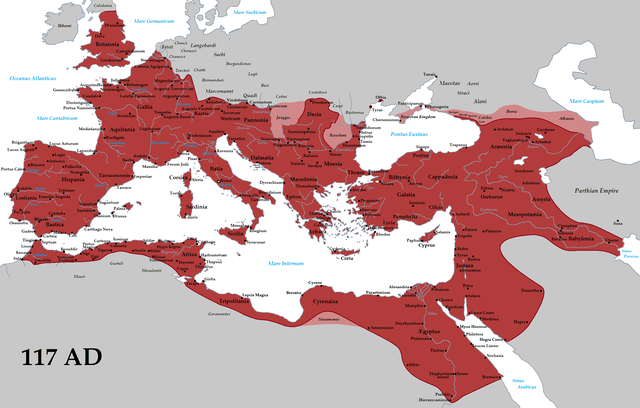
(Image by Tataryn - Creative Commons license - link to map image of Roman Empire)
That, really, is all we'd need to understand what this woman represented. Other elements of the vision confirm this, though. For instance, the woman's name is a city's - Babylon
(v5) - which is an appropriate name for the city responsible for the destruction of the Temple in Jerusalem, as were both Babylon and Rome (Babylon in c. 587 BCE; Rome in 70 CE).
Additionally, the woman is described in Revelation 17 as sitting on seven mountains (v9). This might seem an impenetrable comment to us, but for John and his readers it would've been an obvious reference. Rome was know to be situated on seven hills. It was, simply, seven-hilled Rome
(Sibylline Oracles 2.18; 13.45; 14.108), the city of the seven hills
(Cicero, Letters to Atticus 6.5). From a hill outside the city, one could survey the seven imperial mounts and appraise all Rome
(Martial, Epigrams 4.64). The poet Virgil (of Aeneid fame) wrote in c. 25 BCE that Rome ... with a single city's wall enclosed her seven hills
(Georgics 2.535), She clasps her seven hills in single wall
(Aeneid 6.783). Pliny the Elder, in 77 CE, wrote of Rome Surrounding as it does the Seven Hills
(Natural History 3.9). Every year, the city celebrated Septimontium, a festival, Plutarch says, commemorating the addition to the city of the seventh hill, by which Rome was made a city of seven hills
(Roman Questions 69; cf. Suetonius, Domitian 4). Rome would Sweep the sky more proudly with her seven hills
(Statius, Silvae 4.1.6). It was The city, high on its seven hills, that directs the whole Earth
(Propertius, Elegies 3.11.57).
Rome, that sees the world from her seven hills,
Rome, the place of Empire and the gods.—Ovid, Tristia 1.5.69 (c. 7 CE)
In 71 CE a coin was minted in Asia (the region of the seven churches to which Revelation's addressed) depicting, on one side, the head of Emperor Vespasian and, on the other, the goddess Roma sitting on Rome's seven hills (see Figure 4). Rome itself was deified, with Roma the city personified. The goddess was particularly popular in Greek-speaking, eastern parts of the Roman Empire, where the seven churches were. Smyrna was one of the first cities to build a temple to Roma (Tacitus, Annals 4.56).
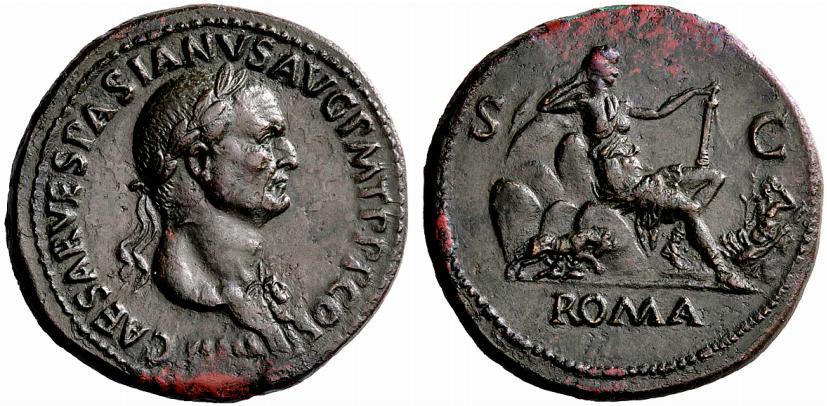
(See this Roman coin on the British Museum website.)
Notice on the coin how Roma is reclining on the seven hills in regal power, a sword in her hand. John's vision satirizes this image, instead depicting Rome as a drunken whore
, cup in hand (17:1,4-6,15-16). For John's audience, then, the description of the woman sitting on seven mountains would've been an obvious reference to Rome.
Rome's cup is full of abominations and the impurities of her prostitution
and she's drunk with the blood of the saints and the blood of the witnesses to Jesus
(v4,6). While persecution of Christians in the Roman Empire has been overstated, there were times when Christians were killed for their faith. The first instance was during Nero's reign, who blamed on the Christians a fire in Rome. He inflicted the most exquisite tortures
on them. Covered with the skins of beasts, they were torn by dogs and perished, or were nailed to crosses, or were doomed to the flames and burnt, to serve as a nightly illumination, when daylight had expired
(Tacitus, Annals 15.44).
So, for John's original audience, the woman in Revelation 17 would've obviously represented Rome ruling over its empire. It does not represent something in a future distant from the time of John's audience. John draws this image for his audience to show the wickedness of Rome, that it should be shunned, and to reassure his readers that Christ (the Lamb
) would destroy Rome and save the chosen and faithful
(v14).
they will wage war on the Lamb, and the Lamb will conquer them, for he is Lord of lords and King of kings, and those with him are called and chosen and faithful.
—Revelation 17:14
The scarlet beast with seven heads and ten horns (Revelation 13 and 17)
As we saw, in Revelation 17 the woman is sitting on a scarlet beast that was full of blasphemous names, and it had seven heads and ten horns
(v3). This beast debuted earlier in Revelation. In chapter 13, it's described as a beast rising out of the sea, with ten horns and seven heads, and on its horns were ten diadems, and on its heads were blasphemous names
(v1). As well as having ten horns
, it's like a leopard, its feet were like a bear's, and its mouth was like a lion's mouth
(13:1-2). If you're familiar with the book of Daniel you might recognise the description and animals mentioned. Like Revelation, Daniel fits into the apocalyptic genre. In Daniel, the book's namesake receives visions of beasts. Daniel doesn't understand the vision until a heavenly being explains it to him, saying:
As for these four great beasts, four kings shall arise out of the earth. [...] As for the fourth beast,
there shall be a fourth kingdom on earth
that shall be different from all the other kingdoms—Daniel 7:17,23
The heavenly being explained the beasts represented kings and kingdoms. In Daniel 7, the beasts, which come out of the sea like the one in Revelation, are a lion (with eagle's wings), a bear, a leopard (with bird wings), and a beast that has ten horns (v3-7). Revelation blends these four beasts together to make a new, fifth beast, fifth kingdom. Alternatively, perhaps in John's vision this is Daniel's fourth beast/kingdom. Either way, this is important to recognise so that we don't ascribe to the beast a role that's anything other than a kingdom. It wouldn't represent, for example, a religion or a religious denomination.
Other elements that highlight this beast is a kingdom include its seven heads (Revelation 13:1), which Revelation 17:9 told us were seven kings
, and that it had a throne
from which it ruled with authority
(13:2). Its horns, which are wearing crowns (13:1), represent kings
(17:12) (Daniel used horns to represent kings, too: 7:24; 8:20). The beast is also described as a military power, able to wage war
(Revelation 13:7). Kings, crowns, a throne, authority and military power - all elements of a kingdom. But which kingdom is this? Remembering John is writing to a specific group to help them with the challenges they face, it should be easy to recognise John is here referring again to Rome, the kingdom ruling over them. Other elements in Revelation 13 and 17 help us understand this is Rome in beast form.
Using language similar to that in Revelation 17, chapter 13:7 says the beast had authority over every tribe and people and language and nation
, which, as we saw, is a fair description of the Roman Empire of John's time. We also saw that the beast's seven heads represented seven hills (17:9) and how, for John's audience, this would've been an obvious reference to Rome, the city of Empire and the gods
that sees the world from her seven hills
(Ovid, Tristia 1.5.69).
Revelation 13 and 17 give other information, too, that helps identify the kingdom to which the beast refers. For example, the beast is said to be covered in blasphemous names
and worshipped (13:1,4,8,12,15; 17:3). Rulers of Rome were worshipped as gods. Julius Caesar was believed to have descended from gods and was himself called a god (Cassius Dio, Roman History 44.6.3-3,37.3-5,47.3,49.1,51.1; Appian, The Histories 3.35). His titles included Unconquered God and Divine Julius. His successor, Augustus, was called Son of a God (compare the centurion's confession about Jesus on the cross: Truly this was a son of a God!
(Matthew 27:54; Mark 15:39 (NASB fn))). Augustus, too, a title bestowed on the emperor, signified the ruler was venerable
, more than human. Other rulers to be called gods included Claudius, Vespasian, Titus, Nerva and Trajan. Caligula was worshipped as the Sun, Nero was worshipped as Apollo, and Hadrian as Zeus. Cassius Dio recorded that, when Nero crowned Tiridates king of Armenia (66 CE), one of Rome's eastern provinces, the latter said to the former, I have come to you, my god, to worship
(Roman History 63.5.2). Domitian was addressed as lord and god
(Suetonius, Domitian 13; Cassius Dio, Roman History 67.4.7,13.4; compare Thomas's confession that Jesus was My Lord and my God!
(John 20:28)). His court poet Martial wrote of the worship of Caesar as deity (Epigrams 20 (17)). When Nero passed through Rome, the whole population, the senators themselves most of all, kept shouting in chorus:
Hail, Olympian Victor! Hail, Pythian Victor! Augustus! Augustus! Hail to Nero, our Hercules! Hail to Nero, our Apollo! The only Victor of the Grand Tour, the only one from the beginning of time! Augustus! Augustus! O, Divine Voice! Blessed are they that hear you.
—Cassius Dio, Roman History 63.20.5
Compare Nero's appellation Divine Voice
with Jesus's designation within Revelation as the Word of God
(19:13; cf. John 1:14). (Also notice the similarity between the words addressed to Nero - Blessed are they that hear you
- and those addressed to the seven churches of Asia: Blessed is the one who reads the words of the prophecy, and blessed are those who hear and who keep what is written in it
(Revelation 1:3).) These titles and more would indeed have been considered blasphemous names
by Christians who worshipped one God and his son, Jesus. John is clearly showing Rome in beast form.
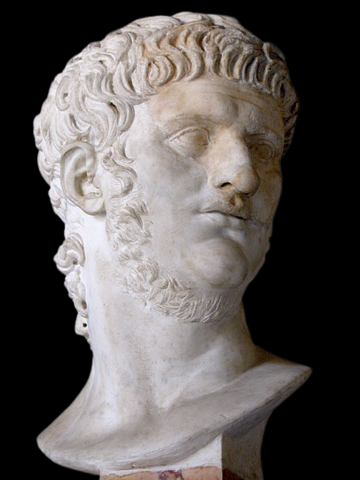
(Image by cjh1452000 - Creative Commons license -
link to image of bust of Nero)
A couple of the ways we can know some of the more esoteric of these texts are about Nero is because they reference things from his life: he began work cutting a canal through the Isthmus of Corinth (Josephus, War of the Jews 3.10.10; Suetonius, Nero 19; Cassius Dio, Roman History 63.16.1-2) and was rumoured to have had his mother killed (Cassius Dio, Roman History 61.12.1-14.1; Suetonius, Nero34.1-5; Tacitus, Annals 14.3-9). As you read, look out for references to matricide and the Isthmus.
Suetonius (c. 9-122 CE)
there were some who for a long time decorated his [Nero's] tomb with spring and summer flowers, and now produced his statues on the rostra in the fringed toga, and now his edicts, as if he were still alive and would shortly return and deal destruction to his enemies. Nay more, Vologaesus, king of the Parthians, when he sent envoys to the senate to renew his alliance, earnestly begged this too, that honour be paid to the memory of Nero. In fact, twenty years later, when I was a young man, a person of obscure origin appeared, who gave out that he was Nero, and the name was still in such favour with the Parthians that they supported him vigorously and surrendered him with great reluctance.
Dio Chrysostom (c. 40-115 CE)
even now everybody wishes he [Nero] were still alive. And the great majority do believe that he is
Tacitus (c. 56-120 CE)
the Parthians were almost roused to arms through the trickery of a pretended Nero.
Tacitus
About this time Achaia and Asia were terrified by a false rumour of Nero's arrival. The reports with regard to his death had been varied, and therefore many people imagined and believed that he was alive.
Lucian of Samosata (c. 125-180)
there was a pseudo-Nero as recently as our own grandfathers' times
Cassius Dio (c. 165-235)
About this time also a man was caught who pretended to be Nero.
Cassius Dio
In his [Titus's] reign also the False Nero appeared, who was an Asiatic named Terentius Maximus. He resembled Nero both in appearance and in voice (for he too sang to the accompaniment of the lyre). He gained a few followers in Asia, and in his advance to the Euphrates attached a far greater number, and finally sought refuge with Artabanus, the Parthian leader, who, because of his anger against Titus, both received him and set about making preparations to restore him to Rome.
Sibylline Oracles 4 (c. 200 CE)
Then a great king will flee from Italy like a runaway slave
unseen and unheard over the channel of the Euphrates,
when he dares to incur a maternal curse for repulsive murder
and many other things, confidently, with wicked hand.
... he runs away, beyond the Parthian land ...
[...]
Then the strife of war being aroused will come to the west,
and the fugitive from Rome will also come, brandishing a great spear
having crossed the Euphrates with many myriads.—Sibylline Oracles 4.119-123,137-139 (c. 200 CE)
Sibylline Oracles 5
One who has fifty as an initial will be commander,
a terrible snake, breathing out grievous war, who one day
will lay hands on his own family and slay them, and throw everything into confusion,
athlete, charioteer, murderer, one who dares ten thousand things.
He will also cut the mountain between two seas and defile it with gore.
But even when he disappears he will be destructive. Then he will return
declaring himself equal to God. But he will prove that he is not.
[...]
... a great king of great Rome, a godlike man
from Italy, will cut the ridge of the isthmus.
Him, they say, Zeus himself begot and lady Hera.
Playing at theatricals with honey-sweet songs rendered
with melodious voice, he will destroy many men, and his wretched mother.
He will flee from Babylon, a terrible and shameless prince
whom all mortals and noble men despise.
For he destroyed many men and laid hands on the womb.
He sinned against spouses, and was sprung from abominable people.
He will come to the Medes and to the kings of the Persians,
those whom he first desired and to whom he gave glory,
lurking with these evil ones against a true people.
[...]
... the three sister Fates, spinning with twisted threads,
lead the one who is (now) fleeing deceitfully
beyond the bank of the isthmus on high so that all may see him,
who formerly cut out the rock with ductile bronze,
he will destroy and ravage your land also, as is decreed.
For to him God gave strength to perform
things like no previous one of all the kings.
[...]
There will come to pass in the last time about the waning of the moon
a war which will throw the world into confusion and be deceptive in guile.
A man who is a matricide will come from the ends of the earth
in flight and devising penetrating schemes in his mind.
He will destroy every land and conquer all
and consider all things more wisely than all men.
He will immediately seize the one because of whom he himself perished.
He will destroy many men and great rulers,
and he will set fire to all men as no one else ever did.—Sibylline Oracles 5.29-34 (cf. 12.78-56),138-149,215-221,361-369
Sibylline Oracles 8
... the blazing
matricidal exile returns from the ends of the earth
[...]
He himself will destroy ... the Romans ...
No longer will the plain of luxuriant Rome be victorious
when he comes from Asia, conquering with Ares
[...]
... when will I see that day,
destructive indeed to you, Rome ...
... the man ...
riding a Trojan chariot from the land of Asia
... he cuts through the isthmus
glancing about, going against everyone, having crossed the sea,
then dark blood will pursue the great beast.—Sibylline Oracles 8.70-71,142,145-146,151-157
Commodian (c. 260 CE)
Nero shall be raised up from hell
Lactantius (c. 250-325 CE)
the tyrant [Nero], bereaved of authority, and precipitated from the height of empire, suddenly disappeared, and even the burial-place of that noxious wild beast was nowhere to be seen. This has led some persons of extravagant imagination to suppose that, having been conveyed to a distant region, he is still reserved alive; and to him they apply the Sibylline verses concerning
The fugitive, who slew his own mother, being to come from the uttermost boundaries of the earth;as if he who was the first should also be the last persecutor, and thus prove the forerunner of Antichrist!—Of the Manner in Which the Persecutors Died, chapter 2 (quoting the Sibylline Oracles (see above))
Augustine of Hippo (354-340 CE)
some suppose that he [Nero] shall rise again
To reiterate, there was a belief that Nero hadn't died, was hiding in the East and would return, crossing the Euphrates with an army, to attack Rome before ruling over it again. (Later developments of the legend elaborated further, saying Nero had risen from the dead.)
Nowadays, there are phrases to refer to these legends about Nero. The belief Nero didn't die but fled to the East and would return is called Nero redux; while the belief he had died and rose (and would come back from the East) is called Nero Redividus.
This is the background to the imagery in Revelation 13, where it says one of the beast's heads had received a death blow, but its fatal wound had been healed
(v3). In fact, this legend of Nero returning is referenced a number of times in Revelation. Over in chapter 17, which we looked at earlier, the beast on which the woman rides is described in language reminiscent of the Nero legend:
The beast that you saw was and is not and is about to ascend from the bottomless pit and go to destruction. And the inhabitants of the earth, whose names have not been written in the book of life from the foundation of the world, will be amazed when they see the beast, because it was and is not and is to come.
—Revelation 17:8
Nero was believed by some to have lived, died or gone into hiding, and was to come, like this beast that was, is not and is to come. Then, in v11, as the angel explains the vision to John, he says the beast that was and is not, it is itself an eighth king
(CEB). Like Nero, this king being represented here was but, as John writes, was not (that is, had died or had gone away). However, echoing the legend of Nero, that wasn't the end of this king: he would return to rule.
These visions, then, are referring to a legend and expectation of John's own day: they referred to either Nero, returned from the East or raised from the dead to rule, or perhaps another emperor, around John's time, who'd rule like Nero - a Nero redux, so to speak.
Store this information for a moment because we'll return to it momentarily. First, though, we'll look at another of Revelation's timeframe indicators to show the kingdoms and kings of who John writes were those that existed around John's day (not hundreds or thousands of years later).
In Revelation 17:9-11, John writes, the seven heads ... are seven kings, of whom five have fallen, one is living, and the other has not yet come, and when he comes he must remain only a little while
. Here, John really focuses on a specific timeframe contemporary with himself. He highlights seven kings, saying five of them have already gone (they've fallen
), one of them is currently ruling (one is living
), and one, in the timeframe of the book, had not yet come
. Perhaps it's not clear to us which seven kings this referred to but, one thing's for sure, within John's timeframe, one of the kings was currently ruling. The things Revelation talks about, with its woman riding a scarlet beast, is not something in a future distant from John; it's something contemporary with him.
Of course, John's audience would've known exactly who these kings were because they had lived under their rule. For us, it's harder because we're distanced from the context. For example, we don't know from which Roman emperor John is starting his seven. However, there might be one thing we can pick up on. John says the seventh king will remain only a little while
. Perhaps we can use this information to help us contextualise Revelation a bit better. Within the first century of the Common Era, emperors with reigns far shorter than those coming before them included:
- Gaius (37-41 CE)
- Galba (June 68 to January 69)
- Titus (79-81 CE)
- Nerva (96-98 CE)
We know, however, Revelation was likely written between 70 and 96 CE, which would exclude all but Titus. If things are this neatly expressed in Revelation, then, perhaps Titus was the seventh king. This would make the eighth king Domitian, who followed Titus.
_Flavian_Emperor_(Domitian)_the_Museo_archeologico_nazionale.jpeg)
(Image by Didier Descouens - Public Domain - link to image of bust of Domitian)
So, perhaps Domitian fits the bill as a neo-Nero. (If this is the case, Revelation could be placing its composition to within the reign of Vespasian (69-79 CE), with Titus as the seventh king who must remain only a little while
, followed by the bald-headed Nero, Domitian, as the eighth, some kind of Nero redux.)
Whichever set of kings this seven might be, they are placeable within John's day. And, as I said, John's audience, living under their rule, would've known who was who.
The beast from the earth (Revelation 13)
In Revelation 13, John is shown another beast, coming out of the earth (v11). What are we to make of this one? It's described as making the earth and its inhabitants worship the first beast, whose fatal wound had been healed
(v11). It tells people to make an image for the beast that had been wounded by the sword and yet lived
(v14). Later in Revelation, it's called a false prophet
(16:13; 19:20; 20:10 (notice the three characters from Revelation 13: the dragon (v2), the beast (v1ff) and the false prophet (v11ff))).
From these descriptions, John's audience would've known what this beast was. We've seen the first beast, covered in blasphemous names
(13:1; 17:3), represented Rome and its rulers who accepted the titles of gods. Here, the second beast is a false prophet telling people to worship the rulers - it's some kind of culture encouraging or pressuring people to worship the emperors. Thus, the second beast is what's known as the Imperial Cult. In the Roman Empire, emperor worship was everywhere. Temples were erected to the rulers, including in most of the cities of Revelation's seven churches:
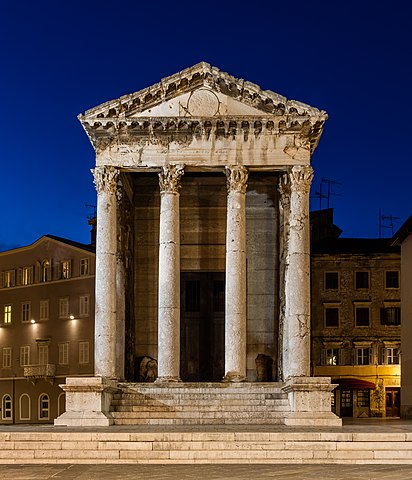
Figure 7: Temple of Augustus in Pula, Croatia (c. 90 BCE)
(Image by Diego Delso - Creative Commons license - link to image of Temple of Augustus)
As mentioned, important places of emperor worship operated in all the cities of Revelation's seven churches. In fact, the province of Asia, where the seven churches were, was a hotbed of the Imperial Cult. Emperor worship came from Rome's eastern provinces, where pharaohs had been considered divine figures. Roman historian Tacitus says the Roman Senate connected the deification of humans particularly with Greek flattery
(Annals 6.18). The Greek cities in Asia were the first to establish places of worship for the emperors and there were rivalries between cities to outdo one another in piety (being a hub of the Imperial cult brought economic benefits). Pergamum, where one of the seven churches was, built the first Imperial Cult temple to a living emperor, Augustus, setting a precedent. Cassius Dio recorded:
Caesar, meanwhile, besides attending to the general business, gave permission for the dedication of sacred precincts in Ephesus and in Nicaea to Rome and to Caesar, his father, whom he named the hero Julius. These cities had at that time attained chief place in Asia and in Bithynia respectively. He commanded that the Romans resident in these cities should pay honour to these two divinities; but he permitted the aliens, whom he styled Hellenes, to consecrate precincts to himself, the Asians to have theirs in Pergamum and the Bithynians theirs in Nicomedia. This practice, beginning under him, has been continued under other emperors, not only in the case of the Hellenic nations but also in that of all the others, in so far as they are subject to the Romans. ... the Pergamenians also received authority to hold the "sacred" games, as they called them, in honour of Caesar's temple.
—Roman History 51.20.6-7,9
The temple in Pergamum was dedicated to the emperor by the whole province of Asia. Perhaps, as a center for the Imperial cult, this is why Revelation says Satan's throne
was there (2:13). In the 20s CE, eleven cities in Asia, including Pergamum, Laodicea and Ephesus, competed for the honour of building a temple to Tiberius. No other province had more than one temple dedicated to an emperor, and some had none. The final decision was between Sardis and Smyrna, with the latter winning (Tacitus, Annals 4.55-56).
With Asia being such a hotbed of the Imperial Cult, we can understand why John railed against it so strongly.
The beast from the earth - the Imperial Cult - was able to perform great signs, even making fire come down from heaven to earth in the sight of all, and by the signs that it is allowed to perform on behalf of the beast it deceives the inhabitants of earth
into worshipping the emperors (Revelation 13:14). In the ancient world, miracles were ascribed to the Imperial Cult and its apparatus. Speaking of the invincible Caesar
, an orator wrote the power of your divinity would be everywhere that your images, everywhere that your statues, are revered
(Panegyric of Constantius 15.6 (297 CE)). The sight alone of a king's image has brought quick victory and ... has protected those who stand by it
(Corpus Hermeticum XVIII.16 (c. 300 CE)). Images of the rulers were said to be animated and portent events in the lives of those they represented.
.jpeg)
(Image by Joel Bellviure - Creative Commons licence - link to image of statue of Augustus)
These are not too dissimilar from John's description that the beast from the earth (that is, the Imperial Cult) would give breath to the image of the beast so that the image of the beast could even speak
(Revelation 13:15).
Plutarch said some emperors imitate [divine] thunders, lightnings, and sunbeams
(Moralia 780F). Emperor Gaius had a contrivance by which he gave answering peals when it thundered and sent return flashes when it lightened. Likewise, whenever a bolt fell, he would in turn hurl a javelin at a rock
(Cassius Dio, Roman History 59.28.6), presumably producing flashes like lightning through another contrivance.
Reminiscent of Jesus's miracles (see particularly Mark 1:31; 3:5; 5:28-29; 8:23-25; John 9:1,6-7), emperors were said to have healed people. A woman's blindness was healed after she kissed Hadrian's feet and washed her eyes in the water in the temple; and Hadrian with a touch healed a man of blindness and fever (Scriptores Historiae Augustae: Marcus Aurelius 25.1-3). Vespasian was said to have healed a man well-known for his blindness
, and another person's diseased hand (Tacitus, Histories 4.81; cf. Cassius Dio, Roman History 65.8.1) or disabled leg. He healed the blind man by anointing his eyes with his spittle
(Suetonius, Vespasian 7). Perhaps rooted in Old Testament prophecies like Micah 5:2, there was an expectation that an emperor or emperors would come from Judea. This was taken to refer to Vespasian and Titus.
Suetonius
A firm persuasion had long prevailed through all the East, that it was fated for the empire of the world, at that time, to devolve on someone who should go forth from Judaea. This prediction referred to a Roman emperor, as the event showed; but the Jews, applying it to themselves, broke out into rebellion
Tacitus
there was a firm persuasion, that in the ancient records of their priests was contained a prediction of how at this very time the East was to grow powerful, and rulers, coming from Judea, were to acquire universal empire. These mysterious prophecies had pointed to Vespasian and Titus, but the common people, with the usual blindness of ambition, had interpreted these mighty destinies of themselves, and could not be brought even by disasters to believe the truth.
Josephus
an ambiguous oracle that was also found in their sacred writings, how,
about that time, one from their country should become governor of the habitable earth.The Jews took this prediction to belong to themselves in particular, and many of the wise men were thereby deceived in their determination. Now this oracle certainly denoted the government of Vespasian, who was appointed emperor in Judea.
Portents and omens foretold of emperors or their great feats. Lightning, rainbows and other omens foretold of Augustus's birth, glorious rule and death. Priests, divination and dreams predicted his greatness. As a child, Augustus commanded a chorus of frogs be silent and they obeyed. An eagle that stole bread from his hand obediently returned it. (Suetonius, Augustus 94.1-97.2.) Portents, omens, dreams and divination foretold of other emperors' rules and successes, such as a rampaging ox becoming docile in Vespasian's presence; and a cypress tree, miraculously uprooted, growing back the next day greener and stronger than before
(Suetonius, Vespasian 5; Cassius Dio, Roman History 65.1; Tacitus, Histories 2.78). The Jewish military leader and historian Josephus was said to have predicted Vespasian's rise to the throne (cf. the story of Yohanan ben Zakkai: Avot DeRabbi Natan 4.5):
Suetonius
one of his high-born prisoners, Josephus by name, as he was being put in chains, declared most confidently that he would soon be released by the same man, who would then, however, be emperor.
—Vespasian 5.6
Cassius Dio
Josephus ... having earlier been captured by Vespasian and imprisoned, laughed and said:
You may imprison me now, but a year from now, when you have become emperor, you will release me.—Roman History 65.1.4
Josephus
Josephus records what he said to Vespasian:
Thou, O Vespasian, art Caesar and emperor, thou, and this thy son. Bind me now still faster, and keep me for thyself, for thou, O Caesar, are not only lord over me, but over the land and the sea, and all mankind; and certainly I deserve to be kept in closer custody than I now am in, in order to be punished, if I rashly affirm anything of God.
Great signs and wonders were said to be seen in the sky portending Vespasian and Titus's destruction of the temple in Jerusalem. A mighty voice was heard coming from the building followed by a great stirring.
Tacitus
There had been seen hosts joining battle in the skies, the fiery gleam of arms, the temple illuminated by a sudden radiance from the clouds. The doors of the inner shrine were suddenly thrown open, and a voice of more than mortal tone was heard to cry that the Gods were departing. At the same instant there was a mighty stir as of departure.
Josephus
before sun-setting, chariots and troops of soldiers in their armor were seen running about among the clouds, and surrounding of cities. Moreover, at that feast which we call Pentecost, as the priests were going by night into the inner [court of the temple,] as their custom was, to perform their sacred ministrations, they said that, in the first place, they felt a quaking, and heard a great noise, and after that they heard a sound as of a great multitude, saying,
Let us remove hence.
All this and more comprised the great signs
with which the beast from the earth - the Imperial Cult - deceive[d] the inhabitants of earth
into worshipping the emperors and their empire, the beast covered in blasphemous names (Revelation 13:14).
Revelation 13 says those who would not worship the image of the beast
were killed (v15). As said before, persecution of Christians in the Roman Empire has been overstated, and emperor worship was rarely demanded. However, it's likely Christians were killed for refusing to worship emperors. While not necessarily directly related to emperor worship, we have examples of the type of Roman bureaucracy to which Christians could sometimes fall foul. Pliny the Younger was governor of Bithynia and Pontus (111-113 CE), areas north of where Revelation's audience lived. He wrote to his emperor, Trajan, asking advice on how to treat Christians. The emperor replied:
You observed proper procedure, my dear Pliny, in sifting the cases of those who had been denounced to you as Christians. For it is not possible to lay down any general rule to serve as a kind of fixed standard. They are not to be sought out; if they are denounced and proved guilty, they are to be punished, with this reservation, that whoever denies that he is a Christian and really proves it - that is, by worshiping our gods - even though he was under suspicion in the past, shall obtain pardon through repentance. But anonymously posted accusations ought to have no place in any prosecution. For this is both a dangerous kind of precedent and out of keeping with the spirit of our age.
This is part of what made up the beast from the earth, a culture and system that pressured people into worshipping Roman gods, including emperors. And it was within this context John encouraged his readers:
Do not fear what you are about to suffer. Beware, the devil is about to throw some of you into prison so that you may be tested, and for ten days you will have affliction. Be faithful until death, and I will give you the crown of life.
—Revelation 2:10
The mark of the beast and the number of the beast
Within this context of the Roman Imperial Cult, John continued and wrote the following much-abused verses about the so-called mark of the beast
:
Also, it causes all, both small and great, both rich and poor, both free and slave, to be given a brand on the right hand or the forehead, so that no one can buy or sell who does not have the brand, that is, the name of the beast or the number for its name.
—Revelation 13:16-17
What is this referring to? Remembering we're in the context of John's day, these verses can't refer to barcodes, microchip implants, vaccines or passports, etc. Further, regardless of the anachronism of inserting such things into the text, John likely wasn't referring to anything specific. The mark - the beast's name or number on the hand or forehead - is ultimately the opposite of the seal of God
on the forehead of God's servants from Revelation 7:3, and the name of the Lamb and his Father written on the foreheads of the 144,000 (14:1) (cf. 22:4; Exodus 13:9,16; Deuteronomy 6:8; 11:18; esp. Ezekiel 9). These don't match to a literal mark, and neither does the so-called mark of the beast
. Rather, these marks represent belonging to one group or the other.
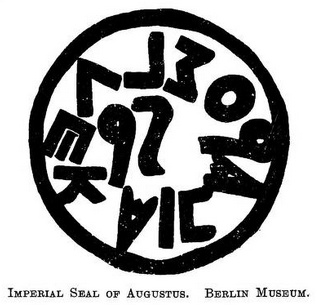
For some financial transactions, then, the mark of the beast would be unavoidable, on coins and documents, and it would be harder to buy or sell without it.
Finally, we end on 666, the number of the beast
:
This calls for wisdom: let anyone with understanding calculate the number of the beast, for it is the number for a person. Its number is six hundred sixty-six.
—Revelation 13:18
This has been interpreted in many incorrect ways. 16th-century clergyman John Foxe (of Foxe's Book of Martyrs fame), the 17th-century preacher George Foster (who claimed visions from God), and 'Abdu'l-Bahá, head of the Baháʼí Faith, saw the number as a date. It's been interpreted as referring to specific Christian denominations, other religions and, more recently, barcodes or organisations. Revelation, however, is clear that this is the number for its [the beast's] name
and, even more specifically, it's the number for a person
(or, as the NABRE, puts it, it is a number that stands for a person
) (v17-18). If our interpretation implicates anything other than a person, it's already wrong.
To calculate the number of the beast
, it's probable John intended his audience to use an interpretive method called gematria. Gematria is a kind of code and, using it, you can do things like turn the letters of a name into a number. In both Hebrew and Greek, the letters were also used as numbers and people were used to converting a name into a number or vice versa. A series of cute, everyday examples from graffiti in Smyrna say, I love one whose number is 1,308
(AGP-SMYT00273), I love a woman whose number is 616
(AGP-SMYT00221), I love a man whose number is 351
(AGP-SMYT00422) and I love one whose number is 731
(AGP-SMYT00242 (Figure 11)).
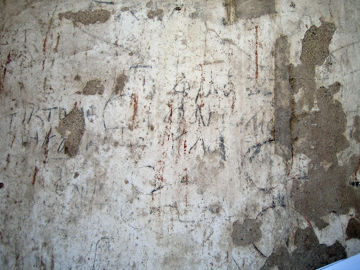
I love [one] whose number is 731
(AGP-SMYT00242 - The Ancient Graffiti Project - Creative Commons licence)
Also graffitied in ancient Smyrna is this Christian gematria: Equal in value: lord, 800; faith, 800
. An example of gematria that's perhaps most pertinent for us comes from Nero's reign, in which the reader is told to calculate
both the Greek word Nero and the phrase killed his own mother
to discover they have identical numerical value (1,005) (Suetonius, Nero 39). Further, gematria is a technique used in other apocalyptic literature, like the Sibylline Oracles (see Aside 10).
Sometimes the gematria methods are quite involved. In the apocalyptic work 3 Baruch, for instance, Greek words are to be written in Hebrew letters before calculating their values. In the book, an angel shows Baruch a snake that drinks the sea but the sea never decreases in volume. Baruch asks how this can happen and is told the sea is fed by 360 rivers. He's then told that 140,000 giants died in the Flood (of Genesis 6-8). (3 Baruch 4.1-8,10.) The Greek word for snake, when transliterated into Hebrew letters, has the numerical value 360; and, when the same's done for the Greek word for flood, its value is 140. It seems this technique - converting Greek words into Hebrew before calculating their value - is a gematria technique used in Revelation, as well see.
So John wanted people to calculate the number of the beast
and to understand to which person it referred. Before we try to calculate the name of this person, though, notice that John is telling his first audience to solve this puzzle. This also shows the person it represented was someone they would've been able to identify. It would've been misleading - and potentially dangerous - to tell them to calculate it if, in fact, it represented someone who wouldn't be alive for centuries after they'd died.
From our perspective and that of people from the centuries after Revelation was written, distanced as we all are from John's day, it could be difficult to identify which person's name 666 represents. Attempts have been made over the past 2,000 years to identify to whom the number refers. Often, though, interpreters pointed the finger at one of their contemporaries rather than someone from John's day, with both side of a dispute even managing to accuse the other.
For John's audience, though, it wouldn't've taken much effort to work out who was represented by 666. Aside from anything else, within the context of this chapter, 666 is said to be the number of a specific beast and we already know a few details about this beast. From Revelation 17, we learned the beast is the eighth king in a succession of rulers, a succession contemporary with John's day. If you recall, John says he and his audience are living during the time of the sixth king, the seventh king will rule a short time, and then this eighth king, the beast that was and is not
, will rule again (17:9-11). So, the person who is represented by the number was someone alive around the time John wrote Revelation (not centuries later).
That phrase, that the eighth king was the beast that was and is not
, is another thing we know about this person: they once were, now were not, but would come again. As Revelation 13 puts it, One of its heads seemed to have received a death blow, but its fatal wound had been healed
(v3); it's the beast whose fatal wound had been healed
(v12), the beast that had been wounded by the sword and yet lived
(v14). As we saw, this language echoes stories about Nero and, through this language, John's audience already knew who the beast represented: somehow, Nero, who had fled or apparently died and was expected to return and rule again. They were already primed to understand the number of its name.
But can 666 represent Nero? Yes, definitely more neatly that most other suggestions, and certainly most well with the context of what we know about this person from these chapters in Revelation. John wasn't expecting his audience to take random stabs at whom the number might represent. He was expecting them to use the context he'd provided to direct their calculation.
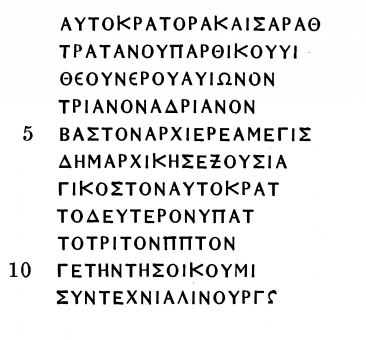
The actual gematria calculation, as in 3 Baruch, comes after transliterating the Greek name Neron Caesar into Hebrew or Aramaic letters, following which its value is 666. An Aramaic financial document (mentioned above in Aside 9), found in what's now known as the West Bank and dated to the second year of the Nero Caesar
, attests to this transliteration of the ruler's name. And it's almost certain Revelation's using the Greek-to-Hebrew technique, as in 3 Baruch, because it has two other instances of this. In chapter 21:17, an angel is measuring the walls of the new Jerusalem, which are 144 cubits. When the Greek word for angel is written in Hebrew letters and their total calculated, it equals 144. The other instance is actually in Revelation 13 itself and even using the word beast. When the Greek word for beast is written in Hebrew letters its value when calculated is also 666. So, in Revelation 13 beast = 666 = Nero Caesar.
Within the world of John's audience, Nero was identified as a beast in other literature, too. This makes it even more likely John's first audience would readily have identified the beast and its number with Nero. Philostratus has Apollonius of Tyana call Nero a wild beast, which many call a tyrant
. Apollonius doesn't know how many heads he has, nor whether he has crooked talons and jagged teeth
, but he's sure he's a monster ... much wilder and fiercer
than other animals because he is only roused to greater cruelty than before by those who stroke him, so that he rends and devours all alike
(Life of Apollonius 4.38 (c. 200 CE)). The Sibylline Oracles call Nero a terrible snake
(5.29), a great beast
(8.157), and maybe even a purple dragon
(8.88; compare the red dragon
and scarlet beast
of Revelation 12:3 and 17:3).
As stated before, it would've been obvious to John's initial audience who the beast was and who was represented by the number 666. It was someone with whom they were familiar. For us, looking back, it's harder to see it as clearly as they would but, hopefully, the above gives us a fair bit of context from which we can grasp what they knew. Of course, this doesn't necessarily mean the beast and 666 refer specifically to Nero, as it could refer to someone like Nero (like Domitian), or perhaps a more general Roman revival of Nero-like ways. Whatever the details, what's certain is that the imagery is pointing to things from the first centuries CE, not from centuries later.
Summary and conclusion
Revelation was written for a group of people who lived a long time ago in circumstances much different to our own. The book's aim was to help them deal with issues they were facing. Through its imagery, it described things they were familiar with in a way that helped them see those things in a focused way. It wasn't written to us and our distance from the original audience in time and culture makes it hard for us to understand the book as they would have. Hopefully, though, the above has demonstrated how John's first audience would likely have understood Revelation.
What can modern readers learn from Revelation?
As Revelation was not written to us and its concern was with things from the first centuries CE, we do the book a disservice - or worse - if we try to force the imagery to fit people, organisation, events, etc., that existed and happened centuries after the book was written. Although the book is time-bound, Christians can still learn from it. This is done, as said towards the start, by looking over the shoulders of the original audience, as it were. Modern readers learn from principles within ancient texts, or from their gist. This shouldn't be a surprising or disappointing suggestion, given it's how Jews and Christians have learned from many parts of their scriptures.
Looking over the shoulders of the first audience, then, what lessons can Christians learn from Revelation? Below I'll outline three.
1. God will win
While the world might be ruled by countries powerful like Rome in its empire - countries that, like those in Revelation, are beastly and terrifying - God will win. Revelation looked forward to the fall of Rome and the establishment of God's kingdom (chapter 18ff).
2. Stay faithful to Jesus
Because of the above certainty, Revelation exhorted its listeners to remain faithful to Jesus (see, e.g., 2:10). This is something modern readers can learn from, too.
3. Be different from the world
Finally, Revelation tells its audience to be different from the world. This is part of what it means to remain faithful to Jesus while waiting from God's kingdom to come. For John, Rome was a place of things like violence, domination, economic exploitation, opulence and hording wealth. Many nations and individuals nowadays embody these same attitudes. Christians are to refrain from such things until God's kingdom comes.
... the merchants of the earth have grown rich from the power of [Rome's] luxury.
Then I heard another voice from heaven saying,
Come out of her, my people,
so that you do not take part in her sins
and so that you do not share in her plagues
[...]
As she glorified herself and lived luxuriously,
so give her a like measure of torment and grief.—Revelation 18:3-4,7
Bibliography
Click to expand bibliography
Header image: detail from White Horse: And I Saw Heaven Opened (Panel 13), by Irene Barberis (2017).
- Ascough, R. S. (2020). 'Greco-Roman Religions and the Context of the Book of Revelation'. Koester (ed.). The Oxford Handbook of the Book of Revelation. OUP.
- Aune, D. (1997). Revelation. 3 vols. WBC. Zondervan.
- Bagnall, R. S. (2011). Everyday Writing in the Graeco-Roman East. University of California Press.
- Bauckham, R. (1993). The climax of prophecy: Studies on the book of Revelation. T&T Clark.
- Bauckham, R. (2001). 'Revelation'. Barton and Muddiman (eds). The Oxford Bible Commentary. OUP.
- Ben Shahar, M. (2023). 'Nero: II.B. Rabbinic Judaism'. Helmer (ed.). Encyclopedia of the Bible and its reception. Vol. 21. De Gruyter.
- Burton, H. F. (1912). 'The Worship of the Roman Emperors'. The Biblical World, 40(2), 80-91.
- Caird, G. B. (1966). A Commentary on The Revelation of St. John the Divine. HNTC. Harper and Row.
- Carter, W. (n.d.). 'Economic Justice and the Roman Empire'. Bible Odyssey.
- Carter, W. (2006). The Roman Empire and the New Testament: An essential guide. Abingdon Press.
- Carter, W. (2012). 'Imperial Cult and Early Christianity'. Oxford Bibliographies.
- Charlesworth, J. H. (ed.) (1983). The Old Testament Pseudepigrapha Volume 1: Apocalyptic Literature and Testaments. Doubleday.
- Cook, S. L. (2003). The Apocalyptic Literature. IBT. Abingdon Press.
- Darvill, T. (2008). 'Imperial Cult'. The Concise Oxford Dictionary of Archaeology (2nd edn). OUP.
- Deissmann, G. A. (1901). Bible Studies: Contributions chiefly from papyri and inscriptions to the history of the language, the literature, and the religion of Hellenistic Judaism and primitive Christianity. T&T Clark.
- Ehrman, B. D. (2023). Armageddon: What the Bible really says about the End. Simon & Schuster.
- Friesen, S. J. (2001). Imperial Cults and the Apocalypse of John: Reading Revelation in the Ruins. OUP.
- Gorman, M. J. (2011). Reading Revelation Responsibly: Uncivil Worship and Witness: Following the Lamb into the New Creation. Cascade.
- Gottheil, R. and Enelow, G. H. (1906). 'Caligula (Caius Cæsar Augustus Germanicus)'. Singer (ed.). Jewish Encyclopedia. Funk and Wagnalls.
- Harland, P. A. (2000). 'Honouring the Emperor or Assailing the Beast: Participation in Civic Life Among Associations (Jewish, Christian and Other) in Asia Minor and the Apocalypse of John'. Journal for the Study of the New Testament, 22(77), 99-121.
- Harland, P. A. (2003). 'Imperial Cults within Local Cultural Life: Associations in Roman Asia'. Ancient History Bulletin / Zeitschrift für Alte Geschichte 17. 85-107.
- Hillers, D. R. (1963). 'Revelation 13:18 and a Scroll from Murabba'at'. Bulletin of the American Schools of Oriental Research Vol. 170.
- Judaism and Rome (n.d.). 'Gaius-Caligula, the New Sun, and the Royal House of Thrace'.
- Koester, C. R. (2014). Revelation. AYB. Yale University Press.
- Koester, C. R. (2016). 'The Number of the Beast in Revelation 13 in Light of Papyri, Graffiti, and Inscriptions'. Journal of Early Christian History, 6(3), 1-21.
- Koester, C. R. (2018). Revelation and the End of All Things (2nd edn). Eerdmans.
- Koffmahn, E. (1968). Die Doppelurkunden aus der Wuste Juda. Brill.
- Kovacs, J., Rowland, C. and Callow, R. (2004). Revelation: The Apocalypse of Jesus Christ. BBC. Blackwell.
- Krauter, S. (2023). 'Nero: I. Greco-Roman Antiquity and New Testament'. Helmer (ed.). Encyclopedia of the Bible and its reception. Volume 21. De Gruyter.
- Krodel, G. A. (1989). Revelation. ACNT. Augsburg.
- Lattimore, R. (1934). 'Portents and Prophecies in Connection with the Emperor Vespasian'. The Classical Journal, 29(6), 441-449.
- Metzger, B. and deSilva, D. A. (2019). Breaking the Code: Understanding the Book of Revelation. Abingdon Press.
- Moss, C. (2013). The Myth of Persecution. HarperOne.
- Naylor, M. (2010). 'The Roman Imperial Cult and Revelation'. Currents in Biblical Research, 8(2), 207-239.
- Odahl, C. M. (2023). 'Nero: III. Christianity'. Helmer (ed.). Encyclopedia of the Bible and its reception. Volume 21. De Gruyter.
- Price, S. R. F. (1984). Rituals and Power: The Roman imperial cult in Asia Minor. Cambridge University Press.
- Scherrer, S. J. (1984). 'Signs and Wonders in the Imperial Cult: A New Look at a Roman Religious Institution in the Light of Rev 13:13-15'. Journal of Biblical Literature, 103(4), 599-610.
- Smith, W. (ed.) (1873). A Dictionary of Greek and Roman biography and mythology. John Murray.
- Stauffer, E. (1947). '666'. Coniectanea Neotestamentica XI: in honorem Antonii Fridrichsev sexagenarii.
- Stauffer, E. (1955). Christ and the Caesars: Historical Sketches. Translated by K. and R. Gregor Smith. Westminster Press.
- Thompson, L. L. (1998). Revelation. ANTC. Abingdon Press.
- Wilson, M. (2005). 'The early Christians in Ephesus and the date of Revelation, again. Neotestamentica 31(1), 163-193'
- Wilson, M. (2024). 'Alternative Facts: Domitian's Persecution of Christians'. Biblical Archaeology Society.
- Wolfson, E. R. (1994). Through a Speculum that Shines: Vision and Imagination in Medieval Jewish Mysticism. Princeton University Press.
- Yarbro Collins, A. (1984). Crisis and Catharsis: The Power the Apocalypse. Westminster Press.